

Nphies-Compliant Medical Claims Management System
A single rejected claim costs you more than its value. It costs the hours spent reviewing and correcting it, it delays the money owed to you, and it leaves a mark on the facility’s entire cash flow. And now that connecting to the Nphies platform has become a regulatory requirement in the Kingdom, choosing an accurate, compliant claims system is a decision that touches your revenue directly.
In this guide we walk through what it actually means for a claims management system to be “Nphies-compliant,” how a claim moves from the moment a patient is received until payment arrives, exactly where rejections happen and how the system prevents them, and what you should ask before you choose.
What “Nphies-compliant” claims system means
At its core, a claims management system is the digital intermediary between the healthcare facility and the payer. It handles the insurance transaction from the start: it verifies patient eligibility, requests approvals, submits the claim, and follows up on payment.
But “Nphies-compliant” carries a specific technical meaning. It means the system exchanges data with the National Platform for Health Information Exchange and Insurance Services (Nphies) in the format it accepts and according to the Council of Health Insurance standards, so the transaction travels a single path without your staff re-entering it manually on the platform.
The difference is more practical than it sounds: a non-compliant system forces your team to enter data twice — once internally and once on the platform — and every extra entry is a fresh chance for an error, then a rejection.
Why connecting to Nphies is no longer optional
Nphies is the unified digital infrastructure that connects care providers with insurance companies and regulators across the Kingdom. For any facility that deals with insurance, connecting to it is no longer a choice you weigh — it is a condition for operating.
When the connection is done right, you feel its effect in three places: a higher first-pass acceptance rate, faster collection, and a clearer, more transparent relationship with insurers. When the connection is weak or relies on manual entry, you get the opposite: recurring rejections, claims left pending, and strained cash flow.
The claim journey from intake to payment
To see where the system earns its value, you need to see where errors occur. A claim passes through five stages, and each one carries a chance of stalling:
Eligibility check
Before the patient receives the service, the system asks Nphies electronically: is this beneficiary covered, and what are the details of their benefits? The answer here spares you a full rejection down the line.
Pre-authorization
Services that require the payer’s approval are sent and tracked electronically, instead of manual calls and correspondence that delay the patient’s path to the operating room.
Claim submission
The claim is submitted with its clinical documentation, coding, and attachments, in the format Nphies accepts technically — not a version that needs editing after it’s sent.
Financial settlement
The system follows the payment and reconciles what arrives from insurers against the claims submitted, so you know exactly where your revenue stands.
Rejection handling and resubmission
When a claim is rejected, this is where a good system stands apart: it explains the cause of the error precisely so it can be corrected and the claim resubmitted quickly, rather than lost in the day’s workload.
Where claims are rejected and how the system prevents it
Little about rejection is random. Most of it traces back to recurring causes, and a compliant system can catch them before submission through validation layers that review the claim structurally, financially, and medically. The table below gathers the most common ones:
| Rejection cause | How the compliant system handles it |
|---|---|
| Incomplete beneficiary data | Verifies eligibility electronically before the service and fills beneficiary data automatically. |
| Missing pre-authorization | Flags services that need approval, then sends and tracks it electronically. |
| Medical coding error | A medical validation layer reviews coding-to-diagnosis matching before submission. |
| Missing documentation or attachments | Links the claim to required attachments as a condition before submission is completed. |
| Format not matching Nphies standards | Sends the transaction in the approved format, closing the door on formal rejection. |
| Duplicate claim | Control mechanisms detect duplication before it reaches the platform. |
The rule every revenue-cycle manager knows: preventing an error before submission is far cheaper than fixing it after a rejection. The effort spent on pre-submission review saves several times its cost in reprocessing.
What the system should provide
When you evaluate any system, these are the capabilities that make the difference in your operational day:
Multiple validation layers that review the claim structurally, financially, and medically.
Integration with the HIS to pull claim data from the facility’s system directly.
Pre-authorization management, both creating and tracking them electronically.
An eligibility log for reviewing previous verification requests easily.
Payment tracking with filtering by insurer and payment status.
Report export of data and statistics for analysis outside the platform.
User and permission management with precise control over access.
Regulatory compliance with Nphies and Council of Health Insurance requirements.
Questions that settle your choice
No single system suits everyone; the right one is what fits your facility’s size and the way it works. Before you decide, ask the vendor these questions:
Does it integrate with my current system?
A system that pulls data directly from your Health Information System (HIS) saves hours of daily entry and greatly reduces manual errors.
How deeply does it check the claim before sending it?
This is where the real difference lies. A system that sends the claim as it received it is nothing like one that reviews it financially and medically first — and the difference shows in the acceptance rate.
Does it cover the full cycle or only part of it?
One platform that manages eligibility, approvals, claims, and settlements beats scattered tools that don’t talk to each other and leave gaps between them.
Motalabatek
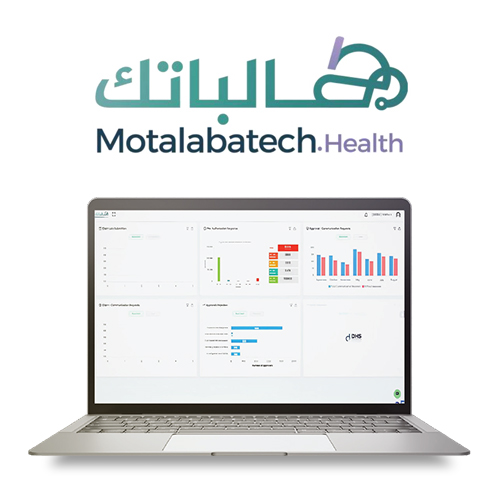
Motalabatek is an integrated, centralized platform for managing health insurance transactions. It handles the insurance data-exchange cycle between the care provider and the payer from start to finish: eligibility check, pre-authorizations, claim processing and resubmission, then financial settlements.
What sets Motalabatek apart is that it doesn’t just move the transaction — it inspects it. It includes structural, financial, and medical validation layers, along with rules-based control mechanisms, catching errors early and reducing rejection before the claim leaves the system.
Pulls claims from your facility’s HIS, or through a structured data upload.
A full log of eligibility and pre-authorizations, plus payment tracking with export.
Compliant with the Nphies platform and Council of Health Insurance requirements by design.
The result is one scalable platform that raises transaction accuracy, speeds up processing, and eases operational complexity.
Explore MotalabatekWant to see the impact on your facility specifically?
The DHS Arabia team is ready for a demo showing how Motalabatek works within your workflow.
Talk to our teamQuestions facility managers ask
Is connecting to the Nphies platform mandatory?
What is the difference between eligibility check and pre-authorization?
Why are claims rejected even when the service is correct?
Can Motalabatek connect to the facility’s current HIS?
This guide is general and introductory, part of the DHS Arabia series on revenue cycle management in the healthcare sector. To discuss your facility’s specific needs, direct contact with the team is recommended.